|
Since 1994 ...Spiritual Pilgrimages
|
|
Since 1994 ...Spiritual Pilgrimages
|
FEATURED SPEAKER: Mark Amaru Pinkham
Andrea Mikana-Pinkham is the Founder/Director of
Sacred Sites Journeys.
This Sacred Sites Journeys tour is offered as a LAND ONLY travel package.
You are responsible to book your international
flights to and from Kathmandu's Tribhuvan International Airport (KTM) -
approximately 4600 ft. elevation.
Do NOT book your international air until you have received the announcement from SSJ that the group minimum has been
reached and that the pilgrimage is a "go".
Breakfast at your leisure.
Breakfast at your leisure.
Breakfast at your leisure.
Breakfast at your leisure.
Day 7. Sunday, September 14. Lhasa: Potala Palace, Norbulinka Gardens,
Breakfast at your leisure.
Breakfast at your leisure.
Breakfast at your leisure. Breakfast at your leisure.
Altitude: Diraphuk - 16,043 ft.
Altitude: 15,715
ft.
Walking Time: approx. 4 Hours After an early breakfast we
depart with the entire group for a short drive of about 7.5 miles to reach
Tarboche,
where we drop off our fellow pilgrims for the starting point for the
Mount Kailash
Yatra. Driving distance: approx. 16 miles - one way After an early breakfast we drive back and meet/picup
up our group members from the Kailash Yatra. After breakfast, we begin our drive back to Saga retracing the same route. Drive Time: approx. 7 hours Altitude: 12,139 ft.
Distance covered: approx.155 kms
The pilgrimage ends after breakfast. IMPORTANT INFORMATION - Please read carefully: Once you book your international flights,
SSJ can arrange a private transfer for you back to the airport to check in for your international return flight home,
with assistance from our English-speaking local SSJ tour representative. Additional cost; not included in your tour package.
Please ask for a quote after you book your flights. Thanks.
NEPAL Portion:
This Sacred Sites Journeys tour is offered as a LAND ONLY travel package. You are responsible to book your international
flights to and from Kathmandu's Tribhuvan International Airport (KTM)
IMPORTANT ANNOUNCEMENT!
Updated 06/29/2025
 This is a ONE-TIME ONLY offering from Sacred Sites Journeys!
Join us for this auspicious once-in-a-lifetime Himalayan Experience!
Travel through the awe-inspiring mountain kingdom of NEPAL,
followed by a visit to the "Forbidden Land" of TIBET at the very Roof of the World.
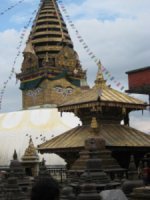
Our pilgrimage begins in
Kathmandu, NEPAL
where we'll explore and experience
some of the most ancient and powerful Hindu temples and other
sacred places in the East!
We'll visit and experience the ancient sacred energies at
Pashupatinath Temple, Boudhanath Stupa,
Swayambhunath Stupa and
Bhaktapur Durbar Square
with its
Nyatapola
and
Bhairavnath Temples.
At
Kathmandu
Durbar Square we might see the
Kumari Devi, the most important of
several living goddesses in Nepal!
We'll also visit the
medieval villages of Bungamati and
Khoka and the temple city of
Patan, full of
many Hindu and Buddhist shrines.
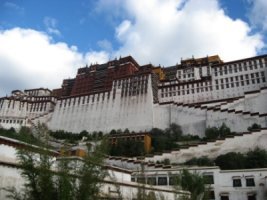
We'll then fly from Kathmandu over the snow-capped Himalayan Peaks to
TIBET,
where we'll continue our pilgrimage to
Lhasa, "The Land of the Gods",
the heart and soul of Tibet
and the capital of the Tibet Autonomous Region of China.
We'll spend two
days exploring the ancient
monasteries and other holy places in and around Lhasa
- the
Drepung
Monastery, Sera Monastery, the Potala Palace, the Norbulinka Gardens, Jokhang
Temple and Barkhor Market.
Then we head out from Lhasa in our motorcoach, making our
way slowly over several days towards the base of
Mount Kailash,
the most holy
mountain in the East, also known as the "Crystal Mountain."
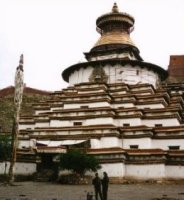
On our way to our first stop at
Shigatse
we visit
Yamdrok Lake, one of the three largest sacred lakes in Tibet.
We also stop at the unique
Phalkor Monastery and in
Gyantse we visit its most famous attraction,
the spectacular Bodhi or
Kumbum Stupa.
As we continue our drive from Shigatse to
Saga we visit the
Tashilhunpo Monastery,
one of the four great monasteries of Central Tibet.
From Saga, as we continue on our drive to
Darchen, we stop at
Lake Manasarovar,
a high altitude freshwater lake fed by the glaciers of sacred Mount Kailash.
The lake is revered as a sacred place in four religions:
Bon, Buddhism, Hinduism, and Jainism.
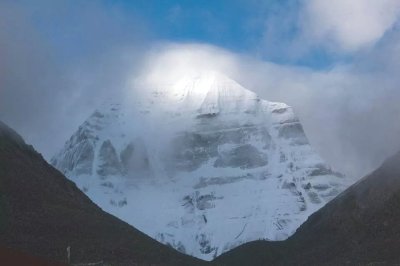
In the afternoon of that day
we finally view sacred Mount Kailash!
Once we reach the base at
Darchen, you can
choose to embark on
the auspicious 2-day pilgrimage trek around its base,
led by Mark Amaru Pinkham.
 It's said that simply by being in the presence of this sacred mountain,
and especially when walking around it,
It's said that simply by being in the presence of this sacred mountain,
and especially when walking around it,
one can achieve extrication
from all worldly desires, dissolution of karma
and even complete enlightenment!
For those in the group who
choose not to circumambulate Mt Kailash,
you'll have the option to visit
other sacred sites with Andrea
Mikana-Pinkham during those two days.
Then the two groups will meet back up after the Kailash pilgrimage
to cross the Tibet/Nepal border and and return overland to Kathmandu.

 LAST CALL FOR REGISTRATIONS!
August 1, 2025 is the DEADLINE to REGISTER!
To request a Registration Form, email Andrea at sacredsitesjourneys@gmail.com ,
or call our office at 928 284-1429
YOUR LEADERS for the PILGRIMAGE
Author of
An Initiates Guide to the Path of the Dragon,
Sacred Geometry and the Creation of the Universe,
the revised &
expanded popular classic
The Return of the Serpents of Wisdom,
From the Green Man to Jesus: The Origin & Evolution of the Christ Myth,
Sedona: City of the Star People
and
three other books about the ancient esoteric history of the traditions and enlightened adepts of the East.
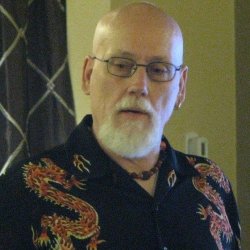
Mark Amaru Pinkham is a lifelong
Shaivite, the yogic path of Lord Shiva,
whose uplifting and spiritually-supportive presence pervades Mt.
Kailash.
During this spiritual journey he will share
in-depth knowledge regarding Shiva and Shaivism,
as well as the
mysteries of Tibetan Buddhism.
Mark has traveled in both Nepal and Tibet during the last 20 years
and has led our previous Sacred Sites Journeys to these ancient countries
full of mystery and spiritual wisdom.
He will share two Power Point presentations, "The Secret Mysteries of Nepal and Tibet"
during group meetings.
As well, he'll also share this fascinating esoteric information informally as we visit the ancient sacred sites in both countries.
During the spiritual pilgrimage he and Andrea will lead the group in sacred
rites and practices
in order to fully
benefit from the amazing spiritual power
and blessings of Mt. Kailash.
A Few Words from Mark Amaru: The most Holy Mountain on Earth is Mt. Kailash,
the physical manifestation of the legendary etheric Mt. Meru which unites Heaven and Earth.
As Meru-Kailash rises into the heavens it unites all dimensions.
A pilgrim circumnavigating its base during a yatra (pilgrimage)
can communicate interdimensionally to all lokas (worlds) within the universe.
The ancients recognized Meru-Kailash to be the very center of the Earth
and located in the most central continent, known in the Hindu legends as Jambu Dwipa.
The mountain is the world's largest Shiva Lingam
and serves as a generator of the
spiritual energy that empowers and nurtures the entire planet.
It's known as the "Swastika Mountain" because not only does it take the form of a swastika
- the symbol of harmonious balance and the cycles of time -
its strategic location keeps the world balanced while spinning on its axis.
Mark is the Founder/Director of
The Order and Mystery School of the Seven Rays
and
The Path of the Dragon Mystery School.
SPEAKER/MEDITATION FACILITATOR/TOUR DIRECTOR: Andrea Mikana-Pinkham
Independent Researcher of Megalithic Sites
and
Practitioner/Teacher of the Goddess Tradition
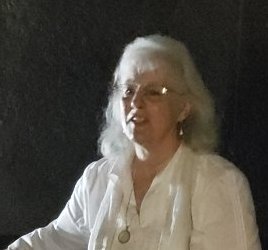
She has over 30 years of experience in the sacred travel field,
organizing and leading spiritual pilgrimages to some of the world's
most important sacred sites.
Along with Mark Amaru, during the spiritual pilgrimage
Andrea will also lead the group in sacred rites and practices
to connect with the energies at the various sacred temples and holy Mt. Kailash.
Andrea is a longtime avid researcher, practitioner and teacher of the Goddess Tradition.
She is also a trained Shamanic Practitioner,
Reiki Grand Master of Ichi Sekai (One World) Reiki, and a
spiritual counselor.
Andrea is a teacher in the The Seven Rays Order and Mystery School
and
The Path of the Dragon Mystery School.
YOUR PILGRIMAGE ITINERARY
September 8 - 24, 2025
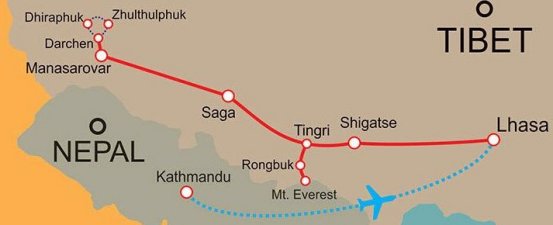
IMPORTANT INFORMATION - Please read
carefully:
1) We highly recommend that you arrive a day early in order to
rest and get over jet lag before our journey begins. SSJ will book any
pre-nights you need at the hotel we'll be using for our group. This will be at an additional cost to the pricing listed here as part of your travel package.
2) If you do arrive
on September 8th, we encourage you to do so by Noon, so that you will have time to rest before our welcome dinner.
3) On arrival in Kathmandu, you'll meet our SSJ representative in the Arrivals Hall; he'll assist you to obtain your Nepal Tourist Visa (additional cost - See "Tour Pricing" section below for details).
Please obtain the 30 day, multiple entry visa. Price at the time of posting is $50.00 US,
or the equivalent amount in Euros or British Pounds Sterling ONLY, and subject to change. You must pay in cash;
please have new bills, with no marks and/or tears on them. A valid passport with at least 6 months validity after the date you enter Nepal,
and one passport size photo with a light background is required. The size of the passport-size photo is not specified.
4) After obtaining your Nepal tourist visa you'll have a private transfer to the hotel with the assistance of our local tour representative.Group members who arrive within one half hour of each other
will be transferred together.
Once you arrive at the hotel, the afternoon is free to rest and relax.
We enjoy our Welcome Dinner at the hotel this evening, taking time to
meet and start to get to know our fellow pilgrims.
NOTE Regarding
Obtaining Your Tibet Tourist Visa: Tour Director Andrea
Mikana-Pinkham will collect your funds for your Tibet Tourist Visa at dinner this
evening, as our ground operator's office will need them, as well as your
completed form, etc. to apply for your visa first thing Tuesday morning.
There is a 3-day processing period, so please bring cash US dollars, correct
change, to give to Andrea tonight. Fees - For USA passport holders: US$235.00; For Canadian passport holders: US$200.00;
Passport holders from all other countries: US$155.00. If visa fees increases
during the time of application, the extra cost will have to be paid by the
clients. - Other information that you will need to supply to SSJ to apply
for the Tibet Tourtist Visa will be sent to you after you register for this
journey.
Day 2. Tuesday, September 9. Kathmandu: Pashupatinath, Boudhanath, and Bhaktapur (B/D)
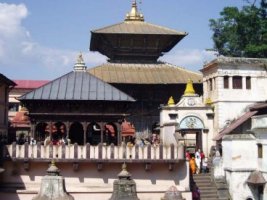
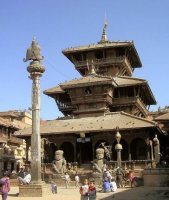
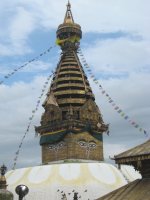
Left to Right: Pashupathnath Temple, Bhaktapur
Durbur Square, Boudhanath Stupa
After breakfast we depart with our local
English-speaking guide to visit Pashupatinath, Boudhanath, and Bhaktapur.
Located east of Kathmandu, Pashupatinath Temple,
a UNESCO World Heritage Site, is one of the holiest Hindu shrines in Nepal
and is dedicated to the Hindu god of destruction, Lord Shiva in his aspect of Pashupatinath. Built in 1696, the
ancient temple with its astonishing architecture of a two-tiered golden
roof and richly carved silver doors, is thronged with devotees and pilgrims from all over the world.
Situated on the banks of the sacred Bagmati River amidst a lush and green natural setting,
it's the center of an annual pilgrimage on the day of Maha Shivaratri, the great Hindu celebration of Lord Shiva's birthday.
We walk through the grounds of the huge Shiva temple and cremation grounds, where Hindus come to die and to be cremated.
They believe that by dying and being cremated in Pashupatinath and having their ashes scattered in the Bagmati River,
they will be released from the cycles of rebirth. Access to the shrine is strictly limited to Hindus; however
we'll be able to view it from outside, from the east banks of the River Bagmati.
Afterwards we enjoy lunch on your own (cost not included in your travel package) with the group.
Then we're off to visit Boudhanath Stupa, one of the most imposing landmarks of Kathmandu and
another UNESCO World Heritage Site. This center of Tibetan Buddhism, is built on a massive three level mandala and is
one of the largest stupas in the world. It's built on an octagonal base with a ring of 108 images of the Buddha and 147 insets
with prayer wheels.
Also a popular tourist attraction, there are many shops around the stupa selling souvenirs, handicrafts, and a variety of exclusive
Tibetan specialties and delicacies.
Later, visit Bhaktapur Durbar Square. Bhaktapur or Bhadgaon, the "City of Devotees," is one of the most medieval temple
cities in Nepal. Before Kathmandu had its heyday, Bhaktapur was the principal seat of worship in the country. You can still get a sense
of what life in 14th century Nepal was like from a visit to Bhaktapur. This ancient city lies on the Arniko Highway that connects
Kathmandu to the Chinese border, and boasts traditional art and architecture, historical monuments, rich culture, pottery and numerous
festivals. It's a world in itself!
Also designated as a UNESCO World Heritage Site, the city has the best-preserved extraordinary temples and palaces from the Malla Dynasty.
Although the April 2015 earthquake badly damaged the Durbar Square, the place still stands tall with the same charm and appeal. Some of the
hightlights of the visit: 1) The Nyatapola Temple: Meaning "five storied", it rises above the city’s landscape as a
remarkable landmark. 2) Bhairavnath Temple: Dedicated to Bhairav, the God of Terror, it's a three-storied temple noted for
its artistic grandeur. 3) The Golden Gate is the entrance to the 15th century Palace of 55 carved windows, and is a
masterpiece in repousse art, which has added splendor to this palace square. 4) You can also stroll around Taumadhi Tole,
a short street lined with tourist shops.
Return to the hotel.
Group Meeting: The Secret Mysteries of Nepal Lecture/Power Point Presentation by Featured Speaker
Mark Amaru Pinkham.
Group dinner at the hotel.
Overnight Kathmandu. Nepali Ghar Hotel or similar.
Day 3. Wednesday, September 10. Kathmandu: Swayambhunath Stupa and Kathmandu Durbar Square (B/D)
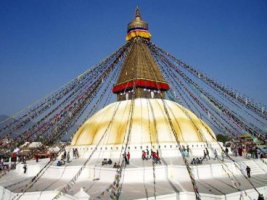
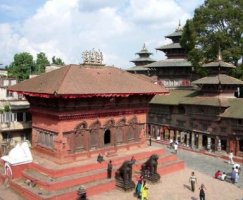
After breakfast we depart to visit Swayambhunath Stupa and Kathmandu Durbar Square.
Climb the steep steps to Swayambhunath Stupa, a UNESCO World Heritage Site.
Here we make our offerings with butter lamps for a successful
pilgrimage.The area surrounding the stupa is filled with smaller chaityas, temples, painted images of deities and numerous other religious objects.
Lunch is on your own (cost not included in your
travel package) with the group.
Later, visit Kathmandu Durbar Square. Durbar means "palace", and takes its name from the old Royal Palace.
This is the center of the old city,
with a number of interesting temples. This UNESCO World Heritage Site is
the former residence of the Nepali royal family and administrators, with
its more than 40 temples, some of which are more than one thousand years
old! These temples unite Hinduism and Buddhism in a unique synthesis not
found anywhere else on Earth. The ancient palace consists of the huge
Royal Palace, Hanuman Dhoka, named after Hanuman, the Perfect Devotee,
with temples dating from the 15th to the 18th centuries.
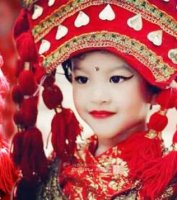
Kathmandu is blessed by a living goddess. The Kumari Devi is the most important of several living goddesses in Nepal.
The worshiping young prepubescent girls as manifestations of the divine female energy or
the "devi" is a tradition in Hinduism and Buddhism. The word Kumari is derived from the Sanskrit Kaumarya, meaning "princess". Trishna Shakya
became the the current Kumari of Kathmandu on September 27, 2017, when
she was just three years old. She left behind her parents and a twin younger brother to embark on the journey of living Goddess. She is
regularly seen on the temple's balcony,
so we might get a glimpse and receive Her blessings!
From the Durbar Square, we take an exciting rickshaw (tricycle) ride
through narrow alleyways to the bustling vegetable and spice market of
Ason.
Return to the hotel.
Group dinner at the hotel.
Overnight Kathmandu. Nepali Ghar Hotel or similar.
Day 4. Thursday, September 11. In Kathmandu: Bungamati, Khokana, Patan City (B/D)
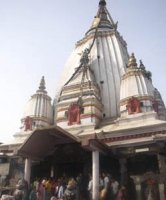
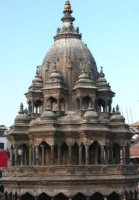
This morning, we visit the medieval villages of
Bungamati and Khoka.
In the afternoon we visit Patan city.
Bungamati is a typical medieval Newari village perched near the Bagmati River,
about 6 miles north from Kathmandu.
Less influenced by modern life and abiding by its old culture and civilization, Bungamati exemplifies true beauty.
A tour through the village of Bungamati gives a clear picture of the primitive lifestyle of the Newari community.
The village streets have quite a few woodcarving shops and once on the streets,
you can see the local Newari people busy working intricate designs on wood or stone.
Most of the people in the village make their living through woodcarving, an art that has been passed down through generations.
Khokana is a small Newari village located about 5 miles from Kathmandu. A village of its own, Khokana is unique in many ways.
Khokana has its own history and over the years it's been less affected by modern civilization and has managed to retain its own culture and tradition.
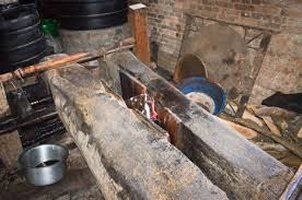
The village is famous for its unusual mustard-oil harvesting process which is
still done today in a traditional way, using a heavy wooden beam to crush the mustard seeds
in order to extract the oil. This oil is rich in therapeutic benefits. Khokana
was the first habitation to be electrified, even before Kathmandu.
Nominated to be listed as a UNESCO World Heritage Site, Khokana represents itself as a vernacular village and for its industrial heritage of mustard-oil seed.
Afterwards we enjoy lunch on your own (cost not included in your
travel package) with the group.
Our last stop for the day is at Patan also known as Lalitpur,
a temple city located on the southern bank of the Bagmati River,
southeast of Kathmandu. This city is full of Hindu temples and Buddhist
monuments with bronze gateways, guardian deities and wonderful carvings.
It's also known as the city of fine arts, full of the superb
craftsmanship of its artisans. Historic inscriptions establish Patan as
an important town from early times.
In the heart of Patan,
amidst the hustle and bustle of the marketplace is the Patan Durbar Square, a UNESCO World Heritage Site.
Exquisite works of religious art and architecture, ancient palaces, pagoda temples, Hindu and Buddhist shrines adorn this place.
Once the residence of the Malla rulers, it has been converted into a museum.
Return to the hotel. Group dinner at the hotel.
Overnight Kathmandu. Nepali Ghar Hotel or similar.
Day 5. Friday, September 12. Fly Kathmandu to Lhasa, Tibet (B/L/D)
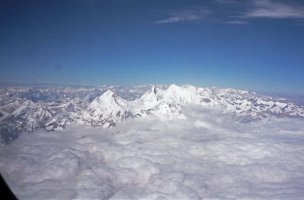
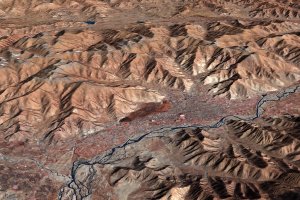
Transfer to the airport and check in for our approximately 1.5 hour flight over the snow-capped Himalayan Peaks to Lhasa.
Upon arrival at the Gonggar Airport, we transfer to our hotel. The rest of the day is free to relax and acclimatize to the altitude (approximately 11,450 ft.)
Group lunch at the hotel.
Lhasa, which means
"The Land of the Gods" is the heart
and soul of Tibet. It is a city of wonders, the capital of the
Tibet Autonomous Region of China. The city contains many culturally
significant Tibetan Buddhist religious sites and lies in a valley next
to the Lhasa River. For centuries this holy city has attracted travelers
from all over the world, drawn by beautiful scenery, cultural heritage
and its mysticism leaves the travelers captivated.
Later afternoon Group Meeting:
Secret Mysteries of Tibet
Lecture/Power Point Presentation by Featured Speaker Mark Amaru
Pinkham.
Group dinner at the hotel.
Overnight Lhasa.
Hotel Banak Shol or similar.
Day 6. Saturday, September 13. Lhasa: Drepung Monastery and Sera Monastery (B/L/D)
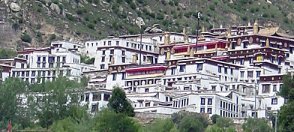
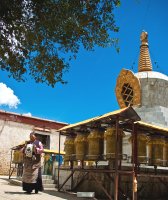
After breakfast, we
depart to visit two of the most important of the local monasteries, the Drepung Monastery and
the Sera Monastery.
The Drepung Monastery, located about 5 miles to
the west of central Lhasa, is one of the "great three" Gelukpa
university monasteries of Tibet. The other two are Ganden and Sera. It's
the largest monastery in Tibet, and formerly the largest in the world,
housing 10,000 monks. Today there are less than 500 monks in residence.
The fertility of its fields supported a monastic community that before
1959, ranked as Tibet’s largest monastery with 7,770 monks. Seen from
afar, Drepung’s grand, white construction gives the monastery the
appearance of a heap of rice. Hence its name literally means "heaps of
rice".
Afterwards we enjoy our group lunch at a local
restaurant.
Then we continue to the Sera Monastery,
3 miles north of Lhasa, and one of the prettiest in the region, hugging the ridge that forms the Northern wall of the Kyi Chu Valley. Founded in 1419,
it's also one of the "great three" Gelukpa university monasteries in Tibet. The origin of the name
"Sera" is not certain, but it may have come from the wild roses (se ra in Tibetan) surrounding the original site.
Return to the hotel. Group dinner at the hotel.
Overnight Lhasa. Hotel Banak Shol or similar.
Jokhang Temple and Barkhor Market (B/L/D)
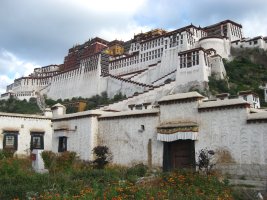
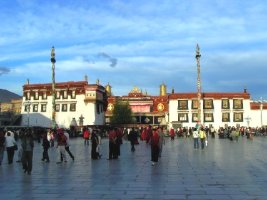
Left to Right:
Potala Palace, Jokhang Temple
After breakfast, we depart to visit the Potala Palace, Norbulinka Gardens, Jokhang Temple and
Barkhor Market.
The Potala Palace, one of the most spectacular buildings in the world,
and the chief residence of the Dalai Lama since the 7th century.
Inside are His quarters and huge, golden tombs of past Dalai Lamas. Considered one of the most famous architectural works of Tibet and a world wonder,
it's been the focus of the travelers for centuries. A cardinal landmark and a structure of massive proportion,
it symbolizes Tibetan Buddhism and its role in the traditional administration of Tibet. It's an architectural gem that was built in the colossal monastic style of Central Tibet in the 7th century,
and then was rebuilt in the mid-17th century. The Tibetans themselves rarely speak of the sacred place as the "Potala", but rather as "Peak Potala" (TsePotala), or usually as "The Peak." It was listed as a UNESCO World Heritage Site in 1994.
Built 100 years after the Potala Palace, Norbulingka means
"Treasure Park" in Tibetan and is situated in the western suburb of Lhasa City, on the bank of the Kyichu River, about
a half mile southwest of the Potala Palace. It's the biggest man-made garden in Tibet. Norbulingka reflects both the ethnic and religious traits of the Tibetan people and embodies the architecture style of inland China. It's of great cultural value and was listed by UNESCO as a World Cultural Heritage Site in 2001, as an extension of Potala Palace.
We enjoy our group lunch at a local
restaurant.
Jokhang, meaning "House of the Lord" in Tibetan, is located at the center of the old Lhasa and is the oldest and the most revered religious structure in Tibet. Built in 647CE by Songtsen Gampo, it has a history of more than 1,300 years. It was built by craftsmen from Tibet, China and Nepal and thus features an intriguing mix of architectural styles. Jokhang Temple also houses many invaluable cultural relics.
Barkhor Street is the oldest street in Lhasa and runs through the center of the old city. It's a circular street where Tibetan culture, economy, religion and arts assemble. The Barkhor Circuit runs through the heart of the old city where life has changed little down the centuries,
so it gives you a curious sensation of having slipped through time into a medieval carnival. Barkhor Street
is known as Tibet's "Sacred Way". Each day hundreds of Buddhist pilgrims flow in from every corner of Tibet and across China to make the trek through
it. Some merely walk, but some progress by body-lengths along the street clockwise,
all day and into the night to worship Sakyamuni. (Siddhartha's caste was the Kshatriya caste (the warrior rulers caste). He belonged to the Sahkya clan and was born in the Gautama family. Because of this, he became to be known as Shakyamuni “sage of the Shakya clan”, which is the most common name used in the Mahayana literature to refer to the Buddha.) Barkhor will
certainly allow you to experience firsthand the religious fervor of Tibet!
Return to the hotel. Group dinner at the hotel.
Overnight Lhasa. Hotel Banak Shol or similar.
Day 8. Monday, September 15. Drive to Shigatse via Gyantse (B/L/D)
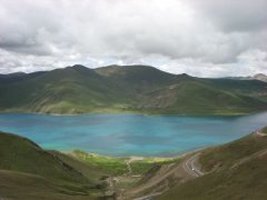
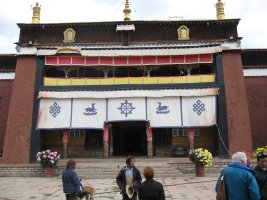
Left to Right: Yamdrol Lake, Phalkor
Monastery, Kumbum Stupa
Today we depart Lhasa and
begin making our way to the base of Mt Kailash. We drive to Shigatse via Gyantse which is one of the important cities in Tibet.
Drive Time: approx. 6 hours. Altitude: 12,795 ft.
En route
we visit Yamdrok Lake, one of the three largest sacred lakes in Tibet,
which is over 45 miles long. The lake is surrounded by many snow-capped mountains and is fed by numerous small streams. According to local mythology, YamdokYumtso Lake is the transformation of a goddess.
We also stop at the unique Phalkor Monastery, also named Palcho Monastery,
which is very different from other monasteries. It's reputed as the lord of Tibetan stupas and is famous for its architecture, sculpture, and mural painting art.
Because it houses three sects, Sakyapa, Kadampa and Gelugpa together Palkhor Monastery enjoys a high status in Tibetan Buddhism history. It was built in collaboration with the Newari architects and Tibetan artists.
Lunch today will either be a packed lunch, or at a local restaurant.
Our last stop is
in Gyantse at its most famous attraction, the spectacular Bodhi or
Kumbum Stupa,
built in 1412 and completed 10 years later. Deemed as the symbol of the
monastery, the spectacular "stupa" consists of hundreds of chapels in
layers, housing about a hundred thousand images of various icons. (Kumbum means
"100,000 images"). Pilgrims climb up each level of the temple in a clockwise (circumambulation) fashion. Dozens of chapels are built into each level, housing about a hundred thousand images of various icons which include Buddhas, Bodhisattvas, Vajras, Dharma Kings, Arhats, Disciples, great adepts of different orders in Tibetan Buddhist history, as well as outstanding figures in Tibetan history. In total there are about 3,000 statues, thus giving it the name "Myriad Buddhas Stupa". Covering a space of 23,680
square feet, this huge complex has a total of 108 gates and 77 chapels, each of which has a dominant religious figure and murals. The cylinder,
65 ft. in diameter, has four chapels inside.
The famous Kumbum pagoda, built in collaboration with Newari artists from Nepal and Tibetan artists, also stands in the same courtyard with nine stories, 108 doors and 77 chapels containing clay sculptures and various murals. The Stupa raises over four symmetrical floors and is surmounted by a gold dome. The dome rises like a crown over four sets of eyes that gaze serenely out in the cardinal directions of the compass.
Continue to Shigatse, the 2nd largest city in the country, and check in at the hotel.
Dinner at the hotel. Overnight Shigatse. Gesar Hotel.
Day 9.
Tuesday, September 16. Drive to Saga (B/L/D)
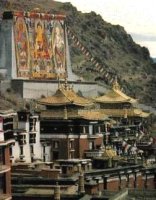
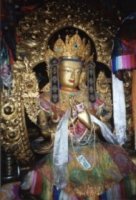
Left to Right: Tashilhunpo
Monastery, Green Tara
We depart after breakfast for our drive from Shigatse to Saga. Drive time: approx. 7 hours.
Altitude: 15,223 ft.
On our way out of town this morning we visit
the Tashilhunpo Monastery, a historic and culturally important monastery in Tibet.
Located on a hill in the center of Shigatse, Tashilunpo means "all fortune and happiness gathered here" or "heap of glory".
Founded by the First Dalai Lama in 1447, and later the residence of the Panchen
Lamas, the monastery in its prime had over
4,000 monks.
It's one of the four great monasteries of Central Tibet and was supervised and looked after by the Dalai Lamas and Panchen Lamas of the
Gelugpa, or Yellow Hat tradition. It has the glory of producing thousands of renowned scholars in the field of
Mahayana Buddhist Philosophy and Tantra. The
Kelsang Temple, a colossal compound, is one of the oldest and biggest buildings in the monastery, and where there is a 16 ft high statue of
Sakyamuni, which legend says contain some of his
relics. Two chapels sit on both sides of the Main Chanting Hall; the left one is devoted to
Tara, the goddess who is believed to be the avatar of
Avalokitesvara. A White Tara is in the middle and two
Green Taras on each side. The right chapel is dedicated to
Maitreya Buddha, with a 36 ft. statue in the middle of the chapel. The Great Courtyard of the Kelsang Temple is the place for lamas to practice and debate. The wall around the courtyard is covered by thousands of images of Sakyamuni in different postures and expressions. Since the early 1980s parts of it have been open to the public,
making it an important tourist attraction today.
After the visit, we drive to Saga over the sandy and rocky land of Tibet. Enjoy sites of lakes and nomads chasing thousands of yaks and sheep.
Lunch today will either be a packed lunch, or at a local restaurant.
We cross the Bhramha Purtra River on the way to the typical Chinese and Tibetan town of Saga,
arriving in the later afternoon.
Group dinner at the hotel.
 Important Note!
Today is the day to decide if you will make the Yatra or go on the
alternate 2-day excursion! If you've not already done so
when you registered for this journey, we ask that you decide today if
you're fit enough to do the Yatra with Mark Amaru, or if you will take the alternate 2-day excursion
with the group going with Andrea to Tholing and Tsaparang (see alternate itinerary
below, beginning on Day 11.)
Important Note!
Today is the day to decide if you will make the Yatra or go on the
alternate 2-day excursion! If you've not already done so
when you registered for this journey, we ask that you decide today if
you're fit enough to do the Yatra with Mark Amaru, or if you will take the alternate 2-day excursion
with the group going with Andrea to Tholing and Tsaparang (see alternate itinerary
below, beginning on Day 11.)
Overnight Saga. The Saga Hotel.
Day 10. Wednesday, September 17. Drive to Lake Manasarovar; Continue to Darchen (B/L/D)
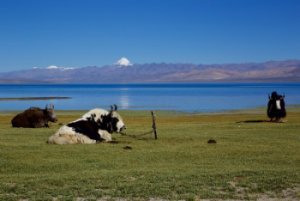
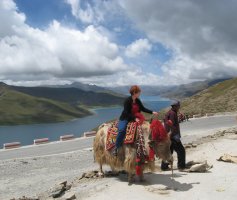
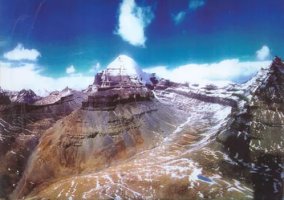
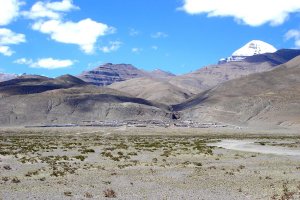
We depart after breakfast. Today we drive through more typical picturesque landscapes.
We reach Lake Manasarovar (Altitude: 14,796 ft.), a high altitude freshwater lake fed by the
glaciers of holy Mount Kailash. This ancient lake is revered as a sacred place in four spiritual
traditions: Bön, Buddhism, Hinduism, and Jainism. During our stop here
you'll have the opportunity to get up close and personal with one of the
friendly Yaks!
We then continue on to Darchen (Altitude: 15,092 ft.)
Drive time: approx. 7-8 hours
Lunch today will either be a packed lunch, or at a local restaurant.
In the later afternoon we finally view ancient Mt Kailash! As we begin
connecting with its powerful energies, our Yatra begins!
We arrive later afternoon in the small village of Darchen, located at the base of Mt Kailash. It was previously an important sheep
station for nomads and their flocks and had only two permanent buildings; only one of which survived the Cultural Revolution and is now
used to house Tibetan pilgrims. Darchen is situated right in front of the sacred mountain and is the starting point for pilgrimages around its base.
Group dinner at the hotel.
Overnight Darchen. Himalaya Hotel. (No link available - This hotel is considered to be the best
option in the region and offers basic but comfortable accommodations for travelers. The rooms are simple and clean, with private
bathrooms and hot water showers. The hotel also has a restaurant that serves Chinese and Western dishes, as well as a tea room.)
FOR THOSE CONTINUING ON THE
MOUNT KAILASH SACRED YATRA with Mark Amaru Pinkham
(For those who are NOT
continuing on the Yatra, scroll down to Day 11 listed below for that
alternate itinerary.
Note that both groups will meet back up on Day 13.)
YATRA ITINERARY: Day 11. Thursday, September 18. Drive to Tarboche. Trek to trek to Diraphuk (B/L/D)
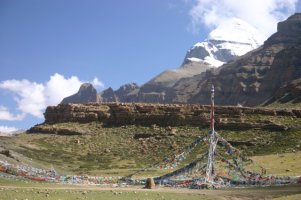
Driving Time: approx. 30 mins
Walking Time: approx. 5 – 6 hours
This is the first day of the Kailash Yatra - the day to start walking! We start our journey after breakfast, as early as possible. Yaks will carry all our goods and equipment.
First we take a short drive of about 7.5 miles to reach Tarboche,
the flagpole which is the starting point for the trekking on Holy
Mount Kailash. Today
is a gradual walk with multitudes of other local pilgrims. Like them we
will have time for meditation, chanting and reflection.
This is the time of the New Moon, which corresponds to the beginning of a new cycle of time. Having it occur during our
sacred Yatra around Mt. Kailash indicates that each one of us will be
initiating a new cycle of experience in our respective lives. And since this one falls in the Zodical sign of
Virgo, the servant, each of us will be contemplating how we can best serve the Earth and those we love
in the months and years that lie ahead of us.
is a time of new beginnings. Mark Amaru, a professional astrologer, will share this and more information with those who are interested.
Lunch today will either be a packed lunch, or at a local restaurant.
The trek today leads us to
a few ups and downs till we reach our camp/guest house at Dirapuk.
Important Notes:
1) In case
you do not feel fit to continue the Yatra,
you will be driven back to Darchen by a guide/helper, where you will have to wait for the
other group members to return. If you stay at Darchen, there will be
a small supplement charge of around $45.00 per person/per night on a full board basis
for the two nights.
2) In case you are not well enough to stay at Darchen and have to be
evacuated to a lower altitude at Kyirong (12, 139 ft.), the supplement cost for Jeep
and personnel to take you there will be $1895.00 per Jeep. In the most
extreme cases there might need to be an evacuation by helicopter. We
highly recomment that you take out trip cancellation / trip interruption
insurance, and include a supplement for that possibility. Information
about the insurance will be sent to you once you register for this
journey.
3) So, we highly
encourage you to decide by the time we reach Saga on Day 9 if you're fit enough
to do the Yatra, or if you will need to take the alternate excursion
with the group going with Andrea to Tholing and Tsaparang (see itinerary
below, beginning on Day 11.) In this case, there will be a supplement
for the alternate itinerary; see the TOUR PRICING section below.
Group dinner at the guest house.
Overnight Diraphuk. Local Guest House.
Note: No
single rooms are available at the guest house. Those who registered for
single rooms will share a twin-bedded room with another person of the
same sex.
YATRA ITINERARY: Day 12. Friday, September 19. Trek Diraphuk to Zhulthulphuk (B/L/D)
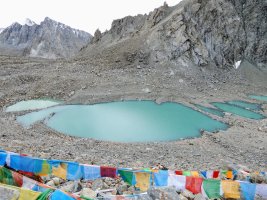
Distance: approx. 13.7miles
Walking Time: approx. 8 hours
This day is difficult and full of climax on the Holy
Kailash Yatra. After an early breakfast we begin our trek to the higher side of the mountains, just under the Holy Mount Kailash. The walk along will bring
us to Drolma La, at 17,060 ft., which is one of the highest points in the trek.
Here we take a bit of time for meditation, reflection and offering our
chants and prayers. From here we descend towards the gradual fields of
Zuthulphuk where we will stay overnight. The descent is steep to the valley below. From the valley below, the walk becomes pleasant and a bit relaxing. The path takes you through some gentle slopes over the grassy field.
Lunch today will either be a packed lunch, or at a local restaurant.
We reach Zuthulphuk in the later afternoon for our overnight stay. Group dinner at the guest house.
Overnight Zuthulphuk. Local Guest House.
Note: See Day 11 for information regarding accommodations.
YATRA ITINERARY: Day 13. Saturday, September 20. Zhulthulphuk to Darchen (B/L/D)
Back at Darchen!
Drive Time: approx 30 minutes to Darchen
Trek down from Zuthulphuk to the vehicle pick-up point and then
ride to
Darchen.
Lunch today will either be a packed lunch, or at a local restaurant.
We arrive at Darchen in the afternoon and meet up with the rest of our
group who took the alternate 2-day excursion.
Group dinner at the hotel.
Overnight Darchen. Himalaya Hotel
TO THOLING & TSAPARANG with Andrea Mikana-Pinkham
Day 11. Thursday, September 18. Drive to Tarboche (with all the group).
Drop off those who are taking the Kailash Yatra. Continue to Tholing (B/L/D)
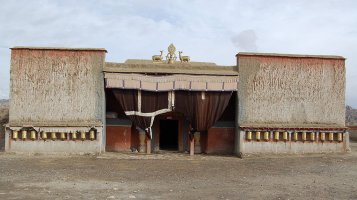
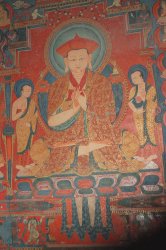
Tholing Monastery - Wiki:
https://en.wikipedia.org/wiki/Tholing_Monastery#/media/File:Tholing_Monastery_(Tibet)_White_Temple_Dieter_Schuh.JPG
and
https://en.wikipedia.org/wiki/Tholing_Monastery#/media/File:Wandgem%C3%A4lde_Wei%C3%9Fer_Tempel_Tholing_(Tibet)_Dieter_Schuh.JPG
This is the time of the New Moon, which corresponds to the beginning of a new cycle of time. Having it occur during our
time near sacred Mt. Kailash indicates that each one of us will be
initiating a new cycle of experience in our respective lives. And since this one falls in the Zodical sign of
Virgo, the servant, each of us will be contemplating how we can best serve the Earth and those we love
in the months and years that lie ahead of us. is a time of new
beginnings.
We continue our drive to Tholing to visit Tholing Monastery,
the oldest monastery in the Ngari Prefecture of western Tibet. In Tibetan language Tholing means "hovering in the sky forever".
This is exemplified by the location of the monastery, which is at
12,400 ft.
Founded by Richen Zangpo in the 10th century, it was once Ngari's most important monastic complex. It was due
his influence that Tholing became the main religious center of the
Guge kingdom after he invitied the famous Indian master
Atisha. Rinchen Zangpo (958–1055), was a principal translator of Sanskrit Buddhist texts into Tibetan during the second diffusion of Buddhism in Tibet. He was a student of Atisha.
The kings of Guge replaced the city as a political center of power by establishing
the capital slightly closer to the Indo-Tibetan trade routes. But the monastery is still an important cultural heritage of Ngari.
The Tholing Monastery complex has many rectangular buildings. It is a walled complex facing east. Built of mud bricks, the style became the forerunner for similar temples built in the kingdom. Before the Cultural Revolution the monastery had six chapels. There are portrait paintings of Tsong Khappa, Sakya Panchen and many Buddhist monks dated to 15th and 16th centuries.
The most prominent among the temples, the Yeshe-Ö Temple, the
"golden house", is built of mud-brick with red mud-brick towers. Colorful chortens are outside at each corner of this temple.
The temple has elaborate-looking towers, with red-painted doors. The temple, in the shape of a
mandala, contains several chapels; some have
murals that are exquisite. There's also a museum hall in the entrance chapel.
The Assembly Hall is single-storied and has paintings of
Yeshe-Ö, the first notable lama-king in Tibet. Born as
Khor-re, he is better known as Lhachen Yeshe-Ö, his spiritual name. He
was the second king in the succession of the kingdom of Guge. These
paintings and others of personages of note are painted
with considerable detail, showing the clothing of those times.
Deities deified in the walls of the hall, in a seated posture,
are peaceful in appearance, and are clothed with textiles and jewelry.
The paintings are traced to the 15th and 16th centuries, and are a
fusion of styles from Tibet, Kashmir and Newari art of Nepal Himalayas.
The Dukhang is where Rinchen Zangpo is said to have lived. Kashmiri art
is seen here, as are the Dipankar, Sakyamuni and Maitreya, the Buddha
images of the past, present and future.
The Lhakhang Karpo, White Chapel, has a high ceiling with thin wooden pillars made of Deodar wood and is painted red.
The floor is of cobblestones while the ceiling is decorated in geometric designs. The Lakhang Karpo's murals, dating to the 15th and 16th
centuries, are well preserved.
Lunch today will either be a packed lunch, or at a local restaurant.
Group dinner at the guest house. Note: No single rooms are available at the guest house. Those who registered for single rooms will share
a twin-bedded room with another person of the same sex.
Overnight Tholing. Guest House.
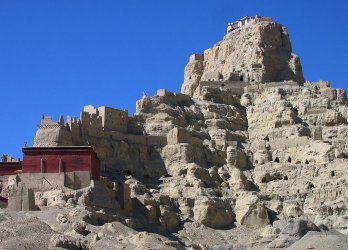
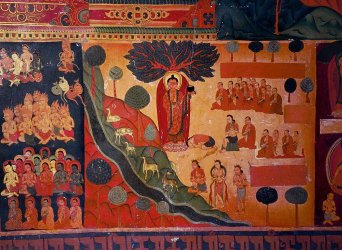
Left to Right: Tsaparang Monastery - Wiki:https://en.wikipedia.org/wiki/Tsaparang#/media/File:Tsaparang-ruins_of_ancient_capital_of_Guge_Kingdom_03.JPG
;
Red Temple Painting - Wiki:
https://en.wikipedia.org/wiki/Tsaparang#/media/File:Guge-householder-yasa.jpg
Drive time: approx. 1 hour - one way
After breakfast, we drive to Tsaparang, which was the capital of the ancient kingdom of Guge. TV Presenter and historian Michael Wood, in the "Shangri-La" episode of the BBC TV/PBS documentary series In Search of Myths and Heroes, suggested that Tsaparang was the historical origin of the legend of
Shangri-La, and that its two great temples were once home to the kings of Guge in modern Tibet.
We'll explore this myth during our visit.
Tsaparang is a huge fortress perched on a pyramid-shaped rock rising about 500 to 600 ft. at the end of a long narrow spur. It contains numerous
tunnels and caves that have been carved out of the rock. At its base was a village where the common people lived. Above them were
two public temples - the Lhakhang Marpo or Red Chapel and the Lhakhang Karpo,
or White Chapel, and quarters for the monks. Further up, ascending a twisting stone staircase in a tunnel, were the
royal quarters, and at the very top, the summer palace.
Afterwards, we drive back to Tholing.
Lunch today will either be a packed lunch, or at a local restaurant.
Group dinner at the guest house.
Note: See Day 11 for information regarding accommodations.
Overnight Tholing. Guest House.
Day 13. Saturday, September 20. Pick up Yatra Pilgrims; Drive Back to Darchen (B/L/D)
GROUP REUNITED!
Group Reunited at Darchen!
Continue to Darchen.
Lunch at a local restaurant or packed lunch.
Group dinner at the hotel.
Overnight Darchen. Himalaya Hotel.
Day 14. Sunday, September 21. Drive Back to Saga (B/L/D)
We have time to rest, relax and integrate the powerful energies
we've encountered, during the Yatra or the alternate exursion...all in
the shadow of sacred Mount Kailash!
Lunch at a local restaurant or packed lunch.
Group dinner at the hotel.
Overnight Saga. Saga Hotel.
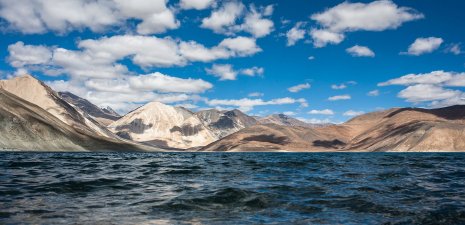
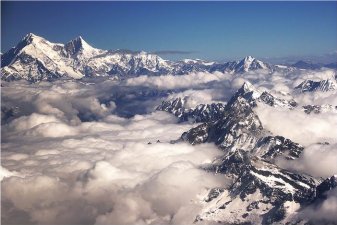
Left to Right: Pagong Lake - Wiki
https://en.wikipedia.org/wiki/Pangong_Tso#/media/File:Pangong_Tso_2.jpg
and Mount Shisha Pangama - Wiki
https://en.wikipedia.org/wiki/Shishapangma#/media/File:Shishapangma.jpg
Drive time: approx. 6 hours
After breakfast, we begin our drive to Kyirong or
Kerung. During the journey, we'll cross the bridge over the Brahmaputra River. Relax and enjoy the mesmerizing views
of Mount Shisha Pangama, the 14th highest mountain in the world at 26,335 ft. above sea level. We'll also
travel near Pagong Lake, a terminal lake (with no outlet) at an elevation of about 14,270 ft. The lake is about 3 miles
wide and approximately 60% of its length lies within the Tibetan Autonomous Region.
Lunch at a local restaurant or packed lunch.
Arrive Kyirong in the afternoon. Group dinner at the hotel.
Overnight Kyirong. Hotel Mustang or similar.
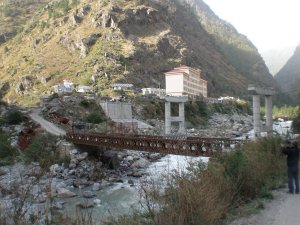
Rasuwagadhi Border Friendship Bridge
Crossing into Nepal - Wiki
https://en.wikipedia.org/wiki/China%E2%80%93Nepal_border#/media/File:Sino-Nepal_Friendship_Bridge.JPG
Drive time: approx. 8 hours
After breakfast, drive to Rasuwagadhi (China-Nepal Border). Complete all the re-entry formalities.
After a short work to the Nepal border, we'll be picked up in our motorcoach for our drive back to Kathmandu.
Lunch at a local restaurant or packed lunch.
Arrive and check in at the hotel. Group Farewell Dinner at the hotel.
Overnight Kathmandu. Nepali Ghar Hotel.
INCLUSIONS
Your Sacred Sites Journey to NEPAL and TIBET Includes
- Meet/greet on arrival at Kathmandu's Tribhuvan International Airport (KTM) by SSJ's local tour representative; assistance obtaining Nepal Tourist Visa;
transfer by private vehicle to the hotel, as well as from the hotel to the airport on departure NOTE: Those arriving and/or departing within half an hour of each other will be transferred together.
- 5 nights accommodation at Hotel Nepali Ghar or similar, Kathmandu on twin /double sharing basis; some single rooms available
- Meals as specified in the itinerary
- All the sightseeing tours and transfers as per the itinerary in a private A/C vehicle with an English speaking guide
- Pick up from Rashuwagadi (Tibet/Nepal border) and transfer to Kathmandu
- All the entrance and monuments fees as indicated in the program
- Rickshaw ride at Kathmandu on Day 3.
TIBET Portion:
- 3 nights accommodation at Mandala Hotel or similar, Lhasa on twin /double sharing room on full board basis;
some single rooms available
- 1 night accommodation at Gesar Hotel, Shigatse on twin /double sharing room on full board basis; some single rooms available
- 2 nights accommodation at Saga Hotel, Saga on twin /double sharing room on full board basis; some single rooms available
- 2 nights accommodation at Himalaya Hotel, Darchen on twin /double sharing room on full board basis; some single rooms available
- 1 night accommodation at Simple Local Lodge at Diraphuk on twin /double sharing room on full board basis;
no single rooms available
- 1 night accommodation at Simple Local Lodge at Zhuthulphuk on twin /double sharing room on full board basis;
no single rooms available
- 1 night at Hotel Mustang, Kyirong on twin/double sharing room on full board basis; some single rooms available
- All entrance and monument fee as indicated in the program
- All the sightseeing tour in private vehicle accompanied by an English-speaking local Tibetan guide
- All Tibet travel permit
- One-time Entrance fees
- Kailash and Manasarovar entrance / ticket fee
- Yak and YaK man (1 Yak for 3 pax basis)
- Oxygen
-
For alternate excursion: 2 nights accommodation at Tholing on twin/double sharing room on full board basis instead of overnights at Diraphuk & Zhuthulphuk respectively;
no single rooms available.
SPECIAL FEATURES:
- Travel in a smaller group of other
like-minded spirit-centered people
- Featured Speaker: author Mark Amaru Pinkham
- Tour Director/Speaker: Andrea Mikana, Sacred Sites Journeys' Director
- Group Meditations facilitated by Mark Amaru Pinkham and Andrea Mikana-Pinkham
NOT INCLUDED:
- Roundtrip international flight to Nepal at Kathmandu's Tribhuvan International Airport (KTM)
- Nepal Tourist Visa (See Pricing section below)
- Tibet Tourist Visa (See Pricing section below)
- Airline flight Kathmandu to Lhasa (See Pricing section below)
- Early
check in and later check out at the group hotel in Kathmandu (SSJ can
arrange any pre and/or post tour hotel night bookings you may need; request
a quote after you book your international air)
- Trip cancellation
/ trip interruption insurance policy - Information will be provided to you
after you register regarding a suggested comprehensive policy covering tour and flight cancellations, loss of valuables, thefts, illness, accidents, hospitalization
and emergency helicopter evacuation
- Expenses incurred by re-routing, inclement weather, floods, famine, political disruptions, strikes, riots and other
other possible disturbances
- Cost to obtain valid passport
- Any items of a personal nature such as laundry, drinks, internet access, telephone
calls and any other item that is not specifically detailed on the Sacred Sites Journeys website
in the final trip itinerary
PRICING FOR YOUR PILGRIMAGE
All pricing listed is in U.S. Dollars.
ARRIVAL: Please book your flight to arrive in Kathmandu on Monday, September 8, 2025.
DEPARTURE: Please book your flight to depart from Kathmandu on Wednesday, September 24, 2025.
IMPORTANT! Do NOT book your international air until you have received the announcement from SSJ that the group minimum has been reached and that the pilgrimage is a "go".
IMPORTANT INFORMATION
ABOUT YOUR ARRIVAL IN NEPAL - Please read carefully:
1) We highly recommend that you arrive a day early in order to rest and get
over jet lag before our journey begins. SSJ will book any pre-nights you need at the hotel we'll be using for our group.
This will be at an additional cost to the pricing listed here as part of your travel package.
2) If you do arrive on September 6th, we encourage you to do so by Noon, so that you will have time to rest before our welcome dinner.
3) On your arrival at Kathmandu's Tribhuvan International Airport (KTM) you'll be met by SSJ's local tour representative. He'll assist you
to obtain your Nepal Tourist Visa.
NOTE about your NEPAL TOURIST VISA for US Citizens (Others please inquire; email SSJ's Director Andrea Mikana-Pinkham at sacredsitesjourneys@gmail.com:
Please obtain the 30 day, multiple entry visa. Price at the time of posting is $50.00 US, or the equivalent amount
in Euros or British Pounds Sterling ONLY, and subject to change. You must pay in cash; please have new bills, with no marks and/or tears on
them. A valid passport with at least 6 months validity and one passport size photo with a light background is required. The size of the
passport-size photo is not specified.
4) After obtaining your Nepal tourist visa you'll have a private transfer to the hotel with the
assistance of our local tour representative. Group members who arrive within one half hour of each other will be transferred together.
NEPAL and TIBET: Sacred Journey to the Himilayas (September 8 - 24, 2025): Per Person, double occupancy, land only:
- $7,099.00 - For payments via check
1) If you choose not to pay by check, you can wire funds directly to our bank account from your bank account.
If you live outside the USA and are wiring the funds, please send them in US dollars and add $25.00 to the amount you're sending
to cover the wire fee.
2) You also have the option to send the funds from your bank account or using a credit card via websites such as www.TransferWise
or www.xe.com (for those from outside the USA) or others you may choose to send funds within the USA. Any fees that are applied
for using these websites are your responsibility.
3) For those in the US, you can send funds via Zelle to our business account. Email Andrea Mikana-Pinkham
at sacredsitesjourneys@gmail.com for details.
ROOMATES: Would you like to meet and make a new friend on your journey? If you're not traveling on the journey with anyone you know,
and would like for SSJ to try to match you up with a suitable roommate, we'll be happy to try to do so.
Over the last 25 years we've been operating these spiritual pilgrimages we've seen many people become friends for life.
(As well, we've had several marriages result from people meeting on our journeys!) Be open! Be flexible!
It will be a rich and wonderful experience!
Single Room Supplement: $815.00 - For payments via check
NOTE:
1) There are a limited number of single rooms available. Once those are filled, an additional supplement may apply for any
additional single rooms that we may be able to reserve at the hotels. So, if you want your own room throughout the journey,
please register EARLY to assure that you will have it, and at the price listed here.
2) There are no single rooms for Days 11 & 12; you will be matched to share a twin-bedded room with another person of the same sex.
ADDTIONAL COSTS NOT INCLUDED IN THE PRICING LISTED ABOVE:
- Roundtrip international flight to Nepal at Kathmandu's Tribhuvan International Airport (KTM)
- Nepal Tourist Visa: $50.00 US for a 30 day, multiple entry visa, or the equivalent amount in Euros or British Pounds Sterling ONLY.
Must be paid in cash, new bills, with no marks and/or tears. Price subject to change.
- Tibet Tourist Visa: For USA/Brazil & Argentina citizens: $235.00 per person; For Canadian citizens: $200.00 per person;
For citizens of other countries: $155.00 per person All prices quoted are in US dollars. Must be paid in cash, new bills, with no marks
and/or tears. Payment also taken in the equivalent in Euros or British Pounds Sterling. No other forms of currency will be accepted.
- Once you register you will be sent the application to fill out and return to SSJ immediately. This form must be sent to our ground operator
in Kathmandu 45 days before the tour begins in order for them to begin working on obtaining the visa. IMPORTANT! We will be entering Tibet
using a group visa, obtained by our representatives in Kathmandu, so DO NOT apply for your visa individually. Payment to be made upon arrival
in Kathmandu on Day 1.
- Flight from Kathmandu to Lhasa: Economy class ticket: From $660.00 to $900.00 - Note: This is the price quote at the time of posting
this pilgrimage on our website. The price could change once ticketed; it could decrease or increase. Therefore we encourage you to please
register as soon as possible to assure that we reach our group minimum by June 1, 2025 so that our ground operator in Nepal can book the
tickets as soon as possible, thus assuring a less expensive flight. Once the journey is assured to go, our ground operator will book
for your flight ticket, using part of your registration deposit (See Below in the "TOUR REGISTRATION" section.) Your statement will be adjusted
to reflect the actual amount paid for your flight ticket at that time.Thank you.
TOUR REGISTRATION
LAST CALL FOR REGISTRATIONS!
August 1, 2025 is the DEADLINE to REGISTER!
To request a Registration Form, email Andrea at sacredsitesjourneys@gmail.com ,
or call our office at 928 284-1429
All Sacred Sites Journeys are smoke-free sacred travel experiences.
All forms of tobacco, as well as e-cigarettes are not allowed at any time.
Thank you for your cooperation.
Questions?
Email info@SacredSitesJourneys.com
Or, call our office at
928 284-1429
We will not sell or share
your information with any other company or individuals.
You can easily un-subscribe at any time.
Sacred Sites Journeys is NOT
affiliated with any other sacred travel company.
Other sacred travel companies offering
spiritual pilgrimages similar to ours
are using our text,
photos and some of our testimonials. We did not give them permission to do so.
We believe that karma is very efficient, and that those who are not in integrity
will swiftly reap the negative benefits of such actions.
Copyright Sacred Sites Journeys 2003 - 2025